
Digital marketing has become an important part of how businesses communicate with customers, promote their products, and build their presence online. But digital marketing is not something that stays the same for a long time. Customer habits change, social media platforms introduce new features, technology develops, and the way people discover information continues to evolve.
A strategy that worked a few years ago may not produce the same results today.
In 2026, one of the biggest changes is the growing role of Artificial Intelligence, changing search behaviour, short-form video, personalization, social commerce, and privacy-conscious marketing. AI is moving from being an experimental tool to becoming part of everyday marketing workflows, while businesses are also paying more attention to first-party data and measurable customer journeys.
For businesses, keeping up with these changes does not mean following every new trend blindly. It means understanding which developments are actually relevant to their audience and finding practical ways to use them.
1. Artificial Intelligence Is Becoming Part of Everyday Marketing
Artificial Intelligence is one of the biggest developments influencing digital marketing.
AI can help marketers with brainstorming, content creation, customer communication, data analysis, personalization, advertising, and repetitive tasks. Instead of spending hours starting everything from scratch, marketers can use AI-assisted tools to create initial ideas, analyze information, and develop different versions of content.
The important change is that AI is increasingly becoming part of normal marketing workflows rather than being treated only as an experimental technology. Current industry research shows strong marketer investment in AI, while also emphasizing that AI performance depends heavily on the quality and reliability of the data behind it.
However, using AI does not mean removing humans from marketing.
A human still needs to decide what the brand should communicate, whether the information is accurate, and whether the content actually connects with its audience. The businesses that use AI as a supporting tool while maintaining human creativity and judgment can build a more balanced approach.
2. Search Is Becoming More Conversational
The way people search for information is changing.
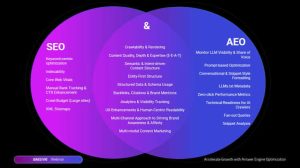
Instead of always typing short keywords into a search engine, people increasingly ask complete questions in natural language. AI-powered search experiences are also changing how people discover information and businesses.
This means brands need to think beyond simply placing keywords in content. They need to provide clear, useful, trustworthy answers to real questions that their audiences ask.
Marketing teams are increasingly paying attention to what is sometimes called Answer Engine Optimization (AEO) or optimization for AI-driven search experiences. HubSpot’s 2026 marketing research identifies adapting content for AI search as a major trend, with many marketers adjusting their approach to changing search behaviour.
For businesses, this makes high-quality informational content even more valuable.
A useful blog should answer questions clearly, explain concepts properly, and provide information that a reader can actually use.
3. Short-Form Video Continues to Shape Attention
People consume a huge amount of content through their phones, and short-form video has become an important part of digital discovery.
Short videos can introduce a product, explain a service, show a process, answer a common question, or tell a quick story.
For businesses, this creates an opportunity to communicate without relying only on traditional advertisements.
A clothing brand might show different ways to style a product. A restaurant can show how a dish is prepared. A digital marketing agency can explain a marketing concept in a short educational video.
The key is not simply making videos because they are popular. The content needs to have a clear purpose.
Current Indian marketing discussions also highlight short-form video and creator-led content as important parts of how consumers discover products online.
4. Authentic Content Is Becoming More Valuable
As AI makes content creation faster, the internet is likely to contain even more automatically produced material.
This creates an interesting challenge: when basic content becomes easier to produce, genuinely useful and original content becomes more noticeable.
People want to see real experiences, practical information, opinions, demonstrations, and stories that feel connected to the brand.
This is why businesses should not use AI simply to produce large amounts of generic content.
A better approach is to use technology for efficiency while adding real expertise, examples, experiences, and a distinct brand voice.
In other words, the goal should not be more content at any cost. The goal should be better content that gives people a reason to pay attention.
5. Personalization Is Becoming More Important
Every customer is different.
A person visiting an online fashion store may be interested in completely different products from someone looking for home accessories. Similarly, two people may respond differently to the same advertisement or email.
Personalization allows businesses to make communication more relevant to different audiences.
AI and data-driven tools can help businesses understand customer behaviour and create more personalized recommendations, messages, offers, and experiences.
But personalization needs to be handled carefully.
Customers should understand how their information is being used, and businesses need to respect privacy and applicable data-protection requirements.
The future of personalization is therefore not simply about collecting more information. It is about using appropriate information responsibly to make the customer experience more useful.
6. First-Party Data Is Becoming More Valuable
For a long time, digital advertising and marketing depended heavily on information collected across different platforms.
As privacy expectations and data regulations evolve, businesses are paying more attention to first-party data—information that customers provide directly through interactions with a business.
Examples can include newsletter subscriptions, website registrations, purchases, customer preferences, and information shared directly with a brand.
Industry forecasts for 2026 highlight first-party data as an increasingly important capability for marketers.
For businesses, this means building direct relationships with customers can become more valuable than depending entirely on audiences controlled by external platforms.
An email list, customer database, website, or loyal community can give a business a more direct way to communicate with people who have already shown interest.
7. Social Commerce Is Connecting Discovery With Shopping
Social media is no longer only a place where people share photos and videos.
It is increasingly becoming part of the shopping journey.
A customer may discover a product through a short video, learn more through a creator, ask a question through messaging, and then complete the purchase through a digital shopping experience.
This reduces the distance between seeing a product and taking action.
In India, Meta has highlighted the growing connection between AI, Reels, creators, messaging, and commerce as part of the changing online shopping journey.
For businesses, this means social media content should not always be viewed separately from sales. Useful content can introduce the product, answer questions, create interest, and support the customer’s decision-making process.
8. Messaging Is Becoming a Marketing Channel
Customers increasingly expect businesses to communicate through convenient digital channels.
Messaging can be used for customer questions, product information, updates, reminders, and other forms of communication.
For businesses, this can create a more direct relationship with customers.
Instead of forcing someone to search through a website for every small question, a well-designed messaging experience can make communication easier.
However, businesses should avoid overwhelming customers with unnecessary promotional messages. Good messaging is useful, timely, and relevant.
The goal should be to make communication easier, not simply to send more messages.
9. Influencer and Creator Marketing Is Becoming More Focused
Influencer marketing is also changing.
Businesses are becoming more interested in finding creators whose audiences are genuinely relevant to their products rather than selecting someone only because they have a huge follower count.
A smaller creator with a focused community can sometimes provide a more relevant environment for a specific product or niche.
Creator-led content can also make product communication feel more natural because the creator can explain or demonstrate something in their own style.
This is particularly useful for products that benefit from demonstration, personal experience, tutorials, or storytelling.
The important factor is relevance. A large audience does not automatically mean that the audience is the right audience for every business.
10. Video, Content and Advertising Are Becoming More Connected
Earlier, businesses often treated content marketing, social media, and advertising as separate activities.
Today, these areas increasingly work together.
A blog can provide information that becomes a social media post. That social post can become a video idea. A successful piece of organic content can inspire an advertisement.
This creates a more connected content system.
Instead of creating every piece of marketing content independently, businesses can develop one strong idea and adapt it across different channels.
This can save time while also creating consistency in brand communication.
11. Data Is Becoming More Important Than Guesswork
Digital marketing provides businesses with a large amount of information.
Marketers can examine website visits, engagement, clicks, leads, conversions, customer behaviour, campaign performance, and other metrics.
The important trend is not simply collecting more numbers. It is learning how to understand them.
For example, if an advertisement receives many clicks but very few people complete the desired action, the business may need to examine what happens after the click.
Perhaps the landing page is unclear. Maybe the offer is not relevant. Maybe customers need more information before making a decision.
Data can help identify these gaps.
Successful marketing therefore requires both creativity and measurement. Creativity attracts attention, while data helps businesses understand what happens next.
12. Privacy and Trust Are Becoming Part of Marketing
Customers are becoming more aware of how businesses collect and use their information.
This means privacy is not only a technical or legal issue. It is also connected to customer trust.
Businesses need to communicate clearly about how information is collected and used and should avoid practices that make customers feel uncomfortable or misled.
Privacy-conscious marketing can become an important part of building long-term relationships.
As data collection practices change, marketers are increasingly looking at consent-based and first-party approaches rather than depending entirely on third-party tracking.
What These Trends Mean for Businesses
The biggest lesson from these trends is that digital marketing is becoming more connected.
AI is connecting with content creation and advertising. Social media is connecting with commerce. Search is connecting with conversational AI. Data is connecting with personalization and measurement.
Businesses therefore need to think about the complete customer journey rather than treating every marketing channel as a separate activity.
A customer may discover a brand through a video, visit its website, read a blog, see an advertisement later, ask a question through messaging, and eventually make a purchase.
Every interaction can contribute to the overall brand experience.
Conclusion
Digital marketing is constantly changing because customer behaviour, technology, platforms, and expectations continue to evolve.
In 2026, AI, conversational search, short-form video, personalization, first-party data, social commerce, creator marketing, messaging, data-driven decisions, and privacy-conscious strategies are all influencing the way businesses approach digital growth.
But following every trend is not the same as having a good marketing strategy.
Businesses should first understand their audience and goals, then choose the technologies and channels that genuinely support them. AI can improve efficiency, video can capture attention, personalization can make communication more relevant, and first-party data can help build direct customer relationships.
The future of digital marketing is therefore not only about using the newest tools. It is about using the right tools in a thoughtful way while keeping people at the centre of the strategy.
Businesses that remain adaptable, create genuinely useful content, understand their customers, respect privacy, and continuously learn from data can build a stronger foundation for long-term digital growth.
Frequently Asked Questions
1. What are the major digital marketing trends in 2026?
Major trends include AI-assisted marketing, AI-powered search, short-form video, personalization, first-party data, social commerce, creator marketing, conversational messaging, and data-driven decision-making.
2. How is AI changing digital marketing?
AI is helping marketers with content creation, data analysis, personalization, advertising, customer communication, automation, and other repetitive tasks. Human strategy and review remain important.
3. Why is short-form video important for businesses?
Short-form video can help businesses explain products, demonstrate services, share educational information, and introduce their brand in a format that is easy to consume on mobile devices.
4. What is first-party data in digital marketing?
First-party data is information a business collects directly through its own interactions with customers, such as website activity, purchases, subscriptions, or information voluntarily provided by users.
5. Is influencer marketing still relevant?
Yes. Influencer and creator marketing continue to be useful, particularly when businesses work with creators whose audience and content are genuinely relevant to the brand.
6. What should businesses do to keep up with digital marketing trends?
Businesses should focus on understanding their audience, regularly reviewing marketing performance, experimenting with relevant channels, using new technology responsibly, and adapting their strategy as customer behaviour changes.