
Imagine spending hours creating a website, uploading useful information, adding your services, and making everything look professional—but hardly anyone visits it. This is a common situation for many businesses that are trying to build their presence online. Having a website is only the beginning. The bigger challenge is making sure that people can actually discover it when they search for something related to your business.
This is where Search Engine Optimization, commonly known as SEO, becomes important.
SEO is one of the major parts of digital marketing. It focuses on improving a website so that search engines can understand its content and users can find it more easily through organic search results. Unlike paid advertising, SEO does not depend on paying for every click. Instead, it focuses on building a useful, trustworthy, technically sound, and search-friendly online presence over time.
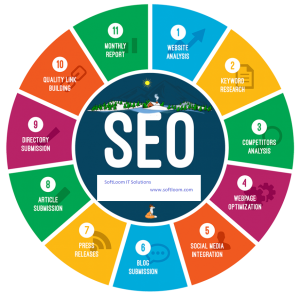
Understanding SEO Beyond Search Rankings
SEO is often described simply as “ranking higher on Google,” but that explanation is incomplete. A website can rank well and still fail to provide a good experience to visitors. Modern SEO is much broader because it connects search visibility with content quality, website performance, user experience, relevance, and credibility.
When a person searches for something online, a search engine has to understand what that person is looking for and identify pages that may provide useful answers. Search engines use complex systems to discover, understand, and organize web pages.
For a business, SEO means making its website easier for both search engines and real people to understand.
For example, suppose a person searches for “digital marketing services for small businesses.” A digital marketing agency that has a well-structured page explaining its services, answering relevant questions, using clear headings, and providing useful information has a better opportunity to be discovered than a website containing only a few generic lines.
Why SEO Matters in Digital Marketing
People often begin their buying journey with an online search. They may search for a product, compare services, read reviews, look for solutions to a problem, or learn more about a particular topic before making a decision.
This makes search visibility valuable for businesses.
SEO can help a business attract people who are already interested in a particular subject, product, or service. Instead of interrupting someone with an advertisement, organic search allows a business to become visible when a user is actively looking for information.
SEO can also contribute to long-term visibility. A useful article or well-optimized service page can continue attracting relevant visitors after it has been published, although rankings and traffic can change over time.
This is one reason SEO is generally considered a long-term digital marketing activity rather than a quick promotional technique.
Keyword Research: Understanding What People Search For
Keyword research is one of the foundations of SEO. Before creating content, marketers need to understand the words and phrases that their target audience may use when searching online.
The goal is not simply to find keywords with high search volume. A keyword should also be relevant to the website, its audience, and the purpose of the content.
For example, a business offering web development may target phrases related to website development services, business website design, ecommerce website development, or other relevant searches.
Search intent is equally important. Someone searching for “what is web development” may be looking for educational information, while someone searching for “web development services” may be considering hiring a professional.
Understanding this difference helps marketers create content that matches what users actually want.
On-Page SEO: Improving What Users See
On-page SEO focuses on elements that exist directly on a webpage.
This includes the page title, headings, content, internal links, images, URLs, and overall structure of the page. The purpose is to make the page clear, useful, and relevant to the topic being discussed.
High-quality content is especially important. A page should not be written only to insert keywords repeatedly. Keyword stuffing can make content unnatural and difficult to read.
Instead, keywords should appear naturally where they make sense.
Headings can also help organize information. A clear structure allows readers to understand the page quickly and makes it easier to navigate longer content.
Internal linking is another valuable part of on-page SEO. When one page on a website naturally refers to another relevant page, linking the two can help visitors discover additional information. It can also help search engines understand the relationship between different pages on the website.
Technical SEO: The Foundation Behind the Website
A website may contain excellent content, but technical problems can still create difficulties.
Technical SEO focuses on aspects of a website that affect how search engines access, understand, and process its pages. Website speed, mobile usability, crawlability, site structure, indexing, redirects, and other technical elements can all be relevant.
Mobile optimization has become particularly important because many people access websites through smartphones. A page that looks good on a large computer screen but becomes difficult to use on a phone can create a poor experience.
Website performance matters for users as well. Slow-loading pages can make visitors leave before they even read the content.
Technical SEO therefore works behind the scenes to support the accessibility, usability, and overall health of a website.
Off-Page SEO and Building Website Credibility
SEO does not stop at the website itself. Off-page SEO focuses on activities and signals that happen outside the website.
One of the most well-known areas is link building. When relevant and trustworthy websites link to a page, those links can contribute to how search engines understand the website’s authority and relevance.
However, building links is not about collecting as many links as possible. Quality, relevance, and natural acquisition are important considerations.
Brand mentions, digital PR, online reputation, and genuine relationships with relevant websites can also support a broader off-page strategy.
The goal should be to build credibility rather than simply manipulate search rankings.
Content and SEO Work Together
Content marketing and SEO are closely connected.
A website needs useful content if it wants to answer users’ questions and appear for relevant searches. Blog posts, guides, service pages, tutorials, case studies, and informative resources can all serve different purposes.
For example, a digital marketing website could publish articles about SEO, Google Ads, social media marketing, email marketing, web development, and other topics related to its services.
Good content should provide something useful to the reader. It should explain a topic clearly rather than simply repeating keywords.
Human readers should always remain the priority. If an article is difficult to understand or feels artificially written for search engines, it may fail to create trust even if it receives visibility.
Local SEO for Nearby Customers
For businesses that serve customers in specific locations, local SEO can be particularly valuable.
Local SEO helps businesses become more visible when people search for products or services in a particular area. Business information, local listings, reviews, location-related content, and consistent contact details can all contribute to a local search presence.
For example, a web development company serving customers in a particular city may create useful location-focused content while maintaining accurate business information across relevant platforms.
Local SEO connects online visibility with real-world customer needs, making it an important part of digital marketing for many local businesses.
SEO and User Experience
Modern SEO cannot be separated completely from user experience.
A visitor should be able to understand a webpage without struggling through confusing navigation, excessive pop-ups, slow loading times, or poorly organized information.
A good SEO strategy therefore asks two questions at the same time: Can search engines understand this page? And can a real person easily use it?
When these two objectives work together, SEO becomes more than a ranking exercise. It becomes a way of improving the entire online experience.
Measuring SEO Performance
SEO requires patience, but patience does not mean ignoring performance.
Marketers can use analytics and search-related tools to understand how a website is performing. Important areas to monitor can include organic traffic, search queries, impressions, clicks, rankings, engagement, and conversions.
Traffic is useful, but it should not be the only goal.
For a business website, a smaller amount of highly relevant traffic may be more valuable than a large amount of visitors who have no interest in the services being offered.
Conversions are therefore an important part of the bigger picture. A conversion could be a contact-form submission, enquiry, purchase, phone call, booking, or another meaningful action.
Common SEO Mistakes
One of the biggest SEO mistakes is expecting instant results. SEO usually requires consistent effort and time because websites need to build visibility, content depth, credibility, and authority.
Another mistake is creating content only for search engines. Articles filled with repeated keywords may look optimized on the surface but can provide little value to readers.
Ignoring technical issues is another problem. Broken links, poor mobile usability, slow pages, indexing problems, or confusing site structures can affect the overall website experience.
Businesses should also avoid copying content from other websites. Originality, usefulness, and a genuine understanding of the audience are much more valuable than simply reproducing information that already exists elsewhere.
The Future of SEO
SEO continues to evolve as search behavior and technology change. Users increasingly interact with search through different formats, including traditional search results, videos, maps, visual content, and AI-powered experiences.
This means businesses need to focus less on chasing individual ranking tricks and more on becoming genuinely useful sources of information.
Strong content, technical foundations, clear website structure, trustworthy information, and a good user experience are likely to remain important even as search technologies develop.
AI is also changing how marketers research topics, analyze information, and create content. However, technology does not remove the need for human judgment. Content still needs accuracy, originality, context, and a clear understanding of what readers actually need.
Conclusion
SEO is much more than adding keywords to a website or trying to reach the first position on Google. It is a complete process that combines content, technical optimization, keyword research, website structure, user experience, credibility, and continuous analysis.
A strong SEO strategy helps businesses become easier to discover while also making their websites more useful for visitors. It takes time and consistent effort, but the focus is on building sustainable online visibility rather than relying only on short-term promotion.
For any business building a digital presence, SEO can become an important foundation. When combined with other digital marketing channels such as social media, Google Ads, email marketing, content marketing, and web development, it can contribute to a more complete online marketing strategy.
Frequently Asked Questions
1. How long does SEO take to show results?
SEO usually takes time because search visibility develops gradually. The timeline can vary depending on competition, website condition, content quality, industry, and the consistency of optimization.
2. Is SEO free?
SEO does not require paying for every click like paid advertising, but effective SEO still requires time, skills, content creation, technical work, and ongoing effort.
3. What are the main parts of SEO?
The major areas include keyword research, on-page SEO, technical SEO, off-page SEO, content optimization, local SEO, and performance analysis.
4. Why is keyword research important?
Keyword research helps marketers understand what people are searching for. It allows content and webpages to be created around topics that are relevant to the target audience.
5. Can SEO help a small business?
Yes. SEO can help small businesses improve their online visibility and reach people searching for relevant products or services. Local SEO can be particularly useful for businesses serving a specific area.
6. Is SEO better than Google Ads?
SEO and Google Ads serve different purposes. SEO focuses on organic search visibility, while Google Ads provides paid advertising opportunities. Many businesses can use both as complementary parts of a broader digital marketing strategy.