
Digital marketing has changed significantly as technology has developed. Businesses today have more ways than ever to reach customers, understand their interests, create content, run advertisements, and communicate with audiences. Among the technologies influencing this change, Artificial Intelligence (AI) has become one of the most talked-about developments.
AI is no longer something that exists only in science fiction or advanced research laboratories. It is already being used in many parts of digital marketing. Businesses use AI-powered systems to analyze information, understand customer behaviour, generate content ideas, personalize communication, automate repetitive tasks, and improve marketing decisions.
However, AI in digital marketing is not simply about allowing a machine to do everything automatically. The real value comes from combining AI’s ability to process information and recognize patterns with human creativity, strategy, experience, and judgment.
What Is AI in Digital Marketing?
AI in digital marketing refers to the use of artificial intelligence technologies to support different marketing activities.
These technologies can analyze large amounts of information, identify patterns, generate content, automate certain processes, and help marketers make more informed decisions.
For example, an AI-powered system can help a business understand which type of content receives more engagement. It can assist with creating an initial advertisement draft, suggest content topics, help answer common customer questions, or provide recommendations based on customer behaviour.
The exact capabilities depend on the AI system and the way a business uses it.
The important point is that AI can support marketers at different stages of the marketing process, from planning and content creation to customer communication and performance analysis.
Why AI Has Become Important in Digital Marketing
Modern marketing generates a huge amount of information.
Businesses may collect data from websites, social media platforms, email campaigns, advertisements, customer interactions, and online purchases. Going through all of this information manually can take a significant amount of time.
AI can help process and organize large amounts of information much faster than a person could do manually.
It can also identify patterns that may be difficult to notice when looking at individual pieces of data.
For marketers, this can create more opportunities to understand audiences and improve campaigns.
At the same time, AI does not automatically understand the complete context of a business. Human marketers still need to decide what the information means and what action should be taken.
AI and Content Creation
Content is one of the biggest parts of digital marketing.
Businesses need blog articles, social media posts, email campaigns, advertisements, product descriptions, video scripts, and many other forms of content.
AI tools can assist marketers during the content creation process.
For example, AI can help brainstorm ideas, create outlines, suggest headlines, generate first drafts, summarize information, or adapt an existing idea into different formats.
This can reduce the time spent on repetitive tasks.
However, publishing AI-generated content without checking it can create problems. AI-generated information may sometimes be inaccurate, repetitive, or unsuitable for a particular audience.
Human editing is therefore important.
A marketer should add real business information, check facts, improve the language, maintain brand personality, and make sure the final content provides genuine value.
AI in Social Media Marketing
Social media requires regular planning and communication.
Marketers can use AI to generate content ideas, identify possible themes, prepare caption drafts, analyze engagement patterns, and organize content planning.
AI can also help marketers understand which types of posts appear to receive more attention from their audience.
For example, if educational videos consistently receive stronger engagement than certain promotional posts, a marketer may decide to create more educational content.
However, social media is also about human connection.
A completely automated social media presence may feel repetitive or impersonal. Human creativity and real-time understanding of conversations remain important.
AI in Advertising
Advertising is another area where AI can support digital marketers.
Online advertising platforms can use automated systems to process information about audiences and campaign performance.
Marketers can also use AI tools to generate ideas for advertising headlines, descriptions, creative concepts, and different versions of promotional messages.
Instead of manually creating every possible variation, a marketer can use AI to explore several ideas and then select the most suitable ones.
AI can also help analyze campaign performance and identify patterns in clicks, engagement, conversions, and other available metrics.
Still, marketers need to review advertising content carefully. Claims should be accurate, and campaigns should follow the rules of the advertising platform.
AI and Personalization
Customers do not all have the same interests.
Someone visiting an online fashion store may be interested in completely different products from another visitor who is looking for sports equipment.
AI can help businesses create more personalized digital experiences by analyzing appropriate customer behaviour and preferences.
Personalization may appear in product recommendations, email communication, website experiences, advertising, and other marketing activities.
When done well, personalization can make communication more relevant.
But businesses must also respect privacy and handle customer information responsibly. Personalization should be useful rather than intrusive.
AI in Email Marketing
Email marketing involves communicating with customers and subscribers through messages such as newsletters, offers, updates, and educational content.
AI can help marketers create initial email drafts, suggest subject-line ideas, organize content, and develop different versions of a message.
It can also assist with understanding campaign performance by analyzing available engagement information.
For example, marketers may compare different subject lines or content formats to understand what resonates with their audience.
However, successful email marketing still depends on relevance. Sending large numbers of automatically generated emails does not necessarily create better results.
The content should have a clear purpose and provide something useful to the recipient.
AI-Powered Customer Support
Customer support is another area where AI has become increasingly useful.
AI-powered chatbots and conversational systems can answer common questions, provide basic information, guide visitors around a website, and assist with simple customer requests.
For example, an online business could use an AI chatbot to answer frequently asked questions about services, product features, or general website information.
This can provide customers with quick assistance at any time.
However, AI should not necessarily handle every situation.
Complex complaints, sensitive issues, unusual requests, or situations requiring human judgment may need to be transferred to a human support representative.
A combination of AI assistance and human support can provide a more balanced experience.
AI and Customer Behaviour Analysis
Understanding customers is one of the most important responsibilities of a digital marketer.
AI can help analyze patterns in customer behaviour across different digital channels.
For example, marketers may study which pages receive the most attention, which content attracts visitors, which products are viewed frequently, or where users leave a website.
These insights can help businesses identify possible improvements.
Instead of making decisions entirely based on assumptions, marketers can use available data to develop more informed strategies.
However, data should always be interpreted carefully. A pattern in numbers does not automatically explain why customers behave in a particular way.
Human analysis and business context are still necessary.
AI and E-commerce Marketing
E-commerce is another area where AI can have a major role.
Online stores can use AI-supported systems for product recommendations, customer support, personalization, content creation, and marketing analysis.
For example, an online store may recommend products based on a customer’s previous browsing or purchasing activity.
AI can also help marketers organize large product catalogs and create or improve product-related content.
These applications can make online shopping more convenient when they are designed responsibly.
The business must still ensure that recommendations and information are accurate and that customer data is handled appropriately.
Benefits of AI in Digital Marketing
AI can provide several benefits to marketers.
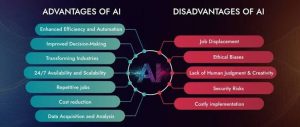
One major benefit is efficiency. Repetitive tasks can sometimes be completed faster with AI assistance.
Another is idea generation. Marketers can use AI to explore different approaches when planning campaigns or creating content.
AI can also support data analysis, helping marketers process information and identify patterns.
Another benefit is personalization, where suitable systems can help businesses provide more relevant experiences to customers.
For smaller businesses, AI tools may also make certain marketing activities more accessible without requiring a large marketing team.
However, these benefits depend on the quality of the data, the tools being used, and the way people apply them.
Limitations and Challenges of AI Marketing
AI is powerful, but it is not perfect.
One important limitation is that AI can produce incorrect information. A response may sound convincing while still containing factual errors.
Another challenge is generic content. If businesses rely too heavily on automated content without adding their own expertise or personality, their marketing may begin to sound repetitive.
Privacy is another important consideration. Businesses must be responsible when collecting and using customer information.
There are also questions around originality, copyright, transparency, and the appropriate use of AI-generated content.
For these reasons, human supervision remains an essential part of responsible AI marketing.
AI Will Assist Marketers, Not Simply Replace Them
One of the biggest discussions surrounding AI is whether it will replace digital marketing professionals.
AI can certainly automate or assist with many tasks, but marketing involves more than producing content or analyzing numbers.
Marketers need to understand people, brands, emotions, business objectives, market conditions, and communication strategy.
A human marketer can decide whether an idea actually fits the brand and whether a particular message is appropriate for its audience.
The most useful approach is therefore to treat AI as a tool that supports human work.
AI can help with speed, research assistance, brainstorming, analysis, and repetitive tasks, while humans remain responsible for strategy, creativity, judgment, and final decisions.
The Future of AI in Digital Marketing
AI is likely to become increasingly integrated into everyday marketing workflows.
In the future, marketers may use AI more extensively for campaign planning, content adaptation, customer communication, data analysis, personalization, and automation.
At the same time, audiences are likely to become more familiar with AI-generated content.
This may increase the value of originality and human perspective.
Businesses will need to find a balance between using technology efficiently and maintaining authentic communication.
The companies that benefit most from AI may not necessarily be those that automate everything. They may be the ones that understand where AI adds genuine value and where human involvement remains essential.
Conclusion
Artificial Intelligence is changing digital marketing by giving businesses new ways to create content, understand audiences, analyze information, personalize communication, support customers, and improve marketing workflows.
Its biggest advantage is not simply automation. AI can help marketers explore ideas, process large amounts of information, reduce repetitive work, and make certain activities more efficient.
At the same time, AI has important limitations. It can make mistakes, produce generic content, raise privacy concerns, and require careful human review.
For this reason, AI should not be treated as a replacement for human creativity and marketing expertise. Instead, it can be used as a supporting technology that helps marketers work more efficiently while humans remain responsible for strategy, accuracy, creativity, and communication.
As digital marketing continues to evolve, the relationship between AI and human marketers will become increasingly important. The most effective approach will be to use AI thoughtfully while keeping the audience, brand identity, accuracy, privacy, and genuine human connection at the center of marketing.
Frequently Asked Questions
1. What is AI in digital marketing?
AI in digital marketing means using artificial intelligence technologies to support activities such as content creation, advertising, customer analysis, personalization, automation, and customer communication.
2. How does AI help digital marketers?
AI can assist with brainstorming, content drafts, data analysis, advertising ideas, social media planning, email creation, personalization, customer support, and repetitive marketing tasks.
3. Can AI replace digital marketers?
AI can automate or assist with many marketing tasks, but human skills such as strategy, creativity, audience understanding, judgment, and brand communication remain important.
4. Can AI create marketing content?
Yes. AI can assist with creating drafts, captions, headlines, email content, scripts, product descriptions, and other marketing materials. The final content should still be reviewed and edited by a human.
5. Is AI-generated marketing content always accurate?
No. AI can sometimes produce incorrect or misleading information. Important facts and claims should be checked before the content is published.
6. What is the future of AI in digital marketing?
AI is expected to become more integrated into marketing activities such as personalization, automation, content creation, customer support, advertising, and data analysis while human creativity and strategic decision-making continue to play an important role.